
Date: May 27, 2026 | By Desert Safari Dubai
Here’s a fact that stops most people cold: the Dubai Desert Conservation Reserve is home to over 33 mammal species, dozens of bird species, and countless reptiles — all thriving in temperatures that regularly exceed 45°C. Most visitors fly into Dubai expecting glass towers and gold souks. Few expect a functioning, world-class wildlife sanctuary sitting just 45 minutes from the city center.
The Dubai Desert Conservation Reserve (DDCR) covers 225 square kilometers of protected desert ecosystem — the UAE’s first and finest protected desert reserve. It isn’t a theme park. It’s a living, breathing desert sanctuary where genuine conservation efforts have rebuilt populations of animals that were, not long ago, gone forever.
Whether you’re booking a Dubai desert safari experience or simply want to know what UAE desert animals actually look like in the wild, this guide covers everything — from iconic large mammals to the tiny beetles engineering miracles beneath your feet.
Established in 2002, the DDCR was a landmark moment for UAE wildlife conservation projects. What was once unprotected desert — vulnerable to poaching, off-road driving, and urban sprawl — became a rigorously managed wildlife conservation program overnight.
Today, the reserve operates active breeding-protection programs, conducts continuous biodiversity monitoring, runs UAE desert-reserve initiatives, and integrates traditional Bedouin heritage desert-conservation practices into its modern management approach. The result is a desert biodiversity conservation success story that’s drawn attention from wildlife organizations worldwide.
Only licensed operators run tours inside DDCR boundaries. Arabian Adventures is among the most established names doing so, offering genuine conservation safari Dubai DDCR experiences with trained naturalist guides.
Key fact: The DDCR was designated a protected area under UAE Federal Law No. 24 of 1999, giving it the same legal protection status as national parks in other countries.
Ask anyone planning a wildlife safari in the Dubai desert what they most want to see. The answer is almost always the same animal.
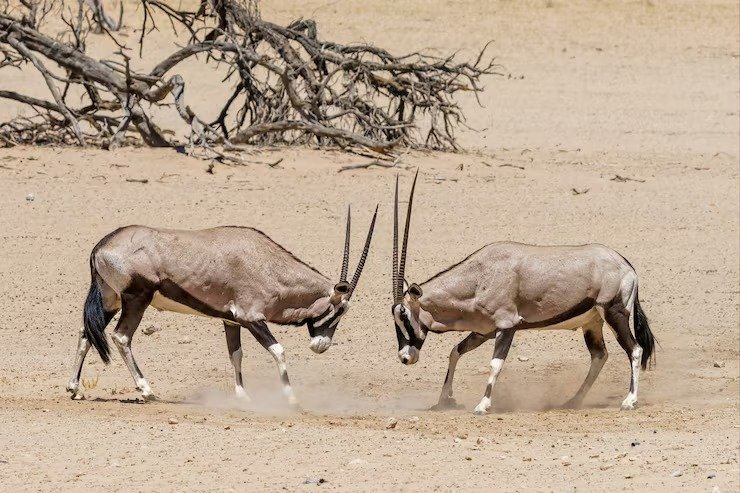
The Arabian oryx (Oryx leucoryx) is the crown jewel of Arabian oryx conservation — and one of the most remarkable extinct-in-the-wild recovery stories on the planet. By the early 1970s, hunters had wiped it out completely across the Arabian Peninsula. Gone. Locally extinct.
What followed changed everything. Captive breeding protection programs slowly rebuilt the population. The reintroduction of Arabian oryx in the UAE through the DDCR became the centerpiece of the recovery effort — and it worked. Today, hundreds roam freely across the reserve’s open plains.
Watching a herd move across sandy dunes at dawn is something you genuinely don’t forget.
Expert insight: The oryx’s brilliant white coat isn’t just beautiful — the white coat’s heat-reflective adaptation actively keeps the animal cooler under brutal midday sun. It’s textbook extreme-temperature adaptation, refined over thousands of years of Survival in arid environments.
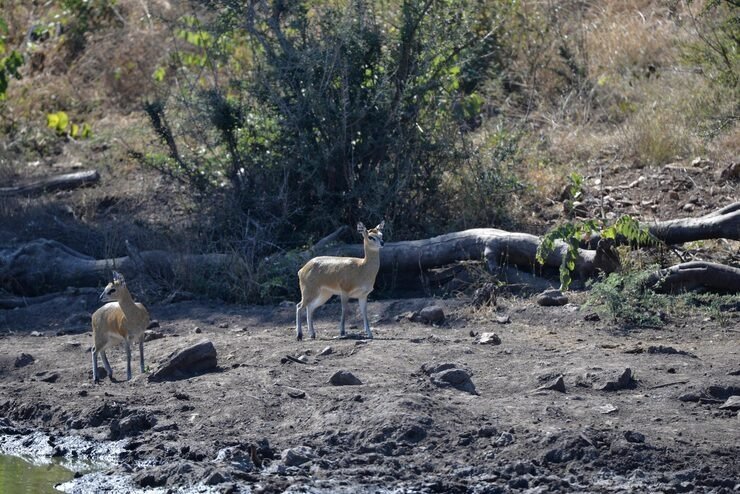
Two gazelle species share the DDCR landscape. Both are masterclasses in desert animal adaptation — but they’ve taken different evolutionary paths.
The sand gazelle (Gazella subgutturosa marica) is built for pure speed. Speed bursts for escape exceed 60 km/h — predator evasion that makes foxes look slow. The Arabian gazelle (Gazella arabica) relies more on sand camouflage and sharp grazing behavior awareness to stay safe.
Both share one extraordinary Survival trick: they never drink free-standing water. All moisture comes from desert vegetation — water conservation pushed to its absolute biological limit. That’s drought resistance you genuinely have to admire.
The Arabian hare (Lepus capensis) is a master of invisibility. Its sandy coat delivers near-perfect camouflage on the desert floor. Almost entirely nocturnal, it relies on daytime hiding and nocturnal activity patterns to avoid both heat and predators. Spot one bolting across the headlights on an evening desert safari, and you’ll understand why experienced guides still get a thrill from it.
The predator-prey balance underpinning the DDCR’s desert food chain depends on a small but formidable group of hunters. Most operate in darkness — making the night safari a particularly rewarding nocturnal wildlife experience for serious wildlife spotters.
The Arabian red fox (Vulpes vulpes arabica) is the reserve’s most adaptable carnivore. Lean, sharp-eared, and extraordinarily cunning, it embodies the Arabian red fox’s nocturnal behavior — hunting alone, using a classic solitary strategy to target insects, small reptiles, and the occasional hare. Nocturnal hunting peaks around dusk and dawn, so an early morning desert safari gives you the best shot at a sighting.
Silent movement is its defining superpower. You’ll rarely hear one before you see it — a trait that makes every encounter feel like a gift.
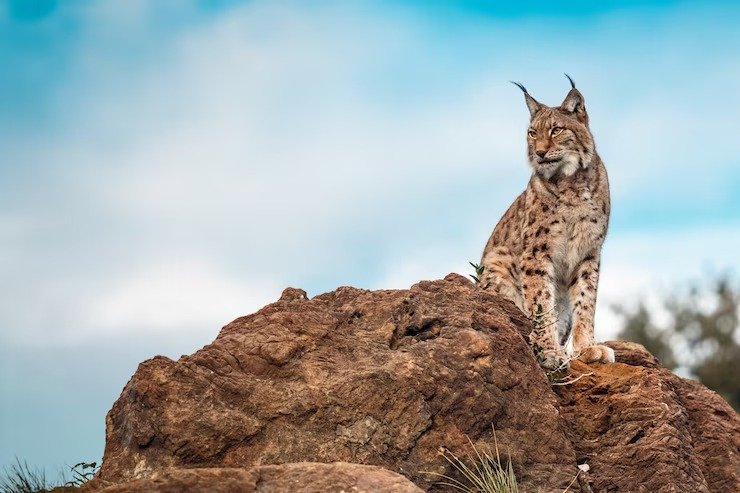
Far rarer and considerably more secretive, Gordon’s wildcat (Felis silvestris gordoni) is the DDCR’s most elusive desert predator. This is territorial behavior —wildcats desert in its purest form—solitary, methodical, and almost impossible to spot without knowing where to look. Its silent movement and solitary hunting instincts are honed to perfection.
Fact: Most of what researchers know about Gordon’s wildcat behavior in the DDCR comes from camera trap footage — not direct observation. Sightings on guided tours are genuinely rare events.
Often overlooked in competitor guides but very much present in the DDCR, the caracal (Caracal caracal) is arguably the reserve’s most spectacular predator. Famous for its remarkable jumping ability — it can leap over 3 meters vertically to snatch birds mid-flight — it combines aerial hunting instincts with nocturnal hunting precision. Critically endangered across much of its range, its presence here speaks directly to the quality of the DDCR’s wildlife conservation programs.
Don’t underestimate the Ethiopian hedgehog (Paraechinus aethiopicus). Small and spiny, it plays a genuinely significant role in its desert ecosystem as an insect controller. Burrowing behavior keeps it cool during the day. Come nightfall, it forages energetically — a perfect example of nocturnal activity patterns driving desert Survival adaptations in miniature.
| Predator | Activity Pattern | Hunting Style |
| Arabian Red Fox | Nocturnal/Crepuscular | Solitary hunting |
| Gordon’s Wildcat | Nocturnal | Territorial, silent stalking |
| Caracal | Nocturnal | Ambush, aerial strikes |
| Ethiopian Hedgehog | Nocturnal | Burrowing, insect foraging |
Reptiles are engineered for arid environment Survival in ways that genuinely astonish biologists. The DDCR hosts several species worth knowing before your safari.
The desert monitor lizard (Varanus griseus) is the reserve’s largest reptile, stretching up to 1.5 meters and built like a miniature dinosaur. An opportunistic feeder, it targets eggs, insects, small mammals, and carrion — placing it firmly in the desert food chain ecosystem as a mid-level predator. Guides at Sunset Evening Safari frequently spot monitors basking near rocky outcrops during morning runs.
The Leptien’s spiny-tailed lizard (Uromastyx leptieni) is genuinely special — largely endemic to the UAE and neighboring Gulf states. Entirely herbivorous, it extracts moisture from desert plants alone. Its spiny-tailed lizard defense mechanism — whipping that armored tail at threats — is remarkably effective and startling to witness. Pure extreme temperature adaptation wrapped in prehistoric aarmorArabian Sand Skink
Call it the sand swimmer. The Arabian sand skink (Scincus mitranus) moves through loose sand by underground locomotion so fluid that it genuinely resembles swimming. This burrowing reptile’s lifestyle keeps it beneath the surface, where temperatures exceed 70°C during peak daylight — desert Survival adaptations at their most elegant.
Often searched for but rarely discussed, the desert horned viper (Cerastes gasperettii) is the DDCR’s most misunderstood resident. Venomous but not aggressive, it relies on extraordinary sand camouflage — burying itself until only its eyes are visible—predator avoidance and ambush hunting in one seamless adaptation. If you spot one, give it space and enjoy the moment.
Desert birds UA, E enthusiasts find the DDCR surprisingly rewarding. Year-round residents mix with seasonal migrants to create genuinely diverse wildlife spotting opportunities in the Bai Desert.
The Arabian great shrike (Lanius excubitor aucheri) looks elegant — almost delicate. Its hunting behavior is anything but. This methodical predator impales prey on thorns, creating food caches it returns to repeatedly. Watch for it perched high, scanning the ground below with cold precision—a hook-billed assassin in beautiful plumage.
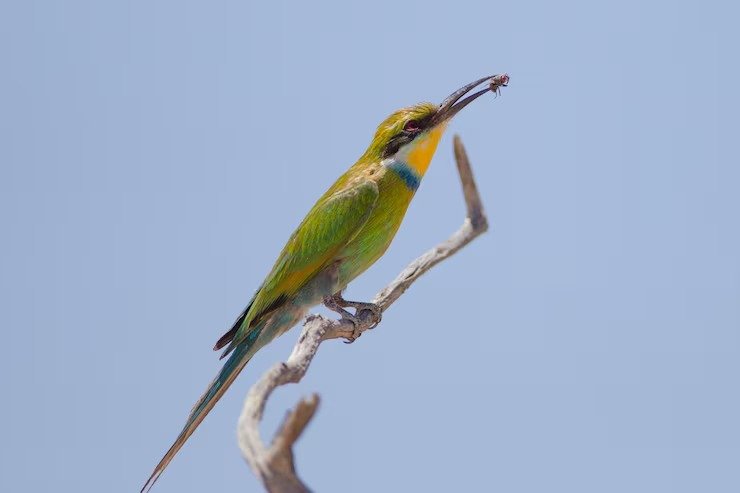
Arguably the most visually stunning of all desert birds, the Arabian green bee-eater (Merops cyanophrys) hunts in social groups — small chattering flocks performing spectacular aerial hunting displays as they snatch insects mid-flight. Their iridescent plumage against desert gold makes them an absolute gift for photography opportunities in desert settings. Don’t put the camera away.
Intelligent, adaptable, and utterly at home in harsh terrain, the brown-necked raven (Corvus ruficollis) is the DDCR’s resident opportunist. Its scavenging behavior keeps the ecosystem clean — ravens are nature’s maintenance crew. Problem-solving intelligence that rivals primates makes every observation genuinely fascinating rather than routine.
Between October and March, the DDCR becomes a critical waypoint on the Arabian Peninsula wildlife migration corridor. Raptors, waders, and songbirds pass through in numbers that surprise even seasoned birders. The desert sunrise safari experience in winter offers the widest variety of desert birds in the UAE.
Desert animals, UAE conversations almost always skip the small stuff. That’s a genuine mistake — the invertebrate life of the DDCR is extraordinary and often overlooked.
The camel spider (order Solifugae) has a mythology wildly out of proportion to reality. Not venomous. Won’t chase you. Definitely doesn’t eat camels. What it will do is sprint across sand at surprising speed, hunting insects and small lizards — a formidable desert predator at its own scale. Watch one hunt and the myths dissolve instantly.
Here’s a creature that deserves far more attention. The darkling beetle (Tenebrionidae family) harvests moisture directly from desert fog using microscopic bumps on its back — fog water collection so effective that engineers have literally reverse-engineered it for water harvesting technology. Darkling beetle desert Survival adaptation is among the most ingenious mechanisms in the natural world—a small beetle, an enormous lesson.
After seasonal rains, the DDCR transforms. Insects surge. Butterflies appear almost magically from nowhere. Three species genuinely worth watching for:
Desert butterflies’ seasonal migration in the UAE is completely unpredictable, which makes every sighting feel like finding something rare because it is.
Timing transforms a good safari into an exceptional one. Here’s the honest breakdown:
| Time of Day | Best For | Wildlife Activity |
| Dawn 5:30–7:30 am | Oryx, gazelles, foxes | Very high |
| Morning 7:3010 amm | Reptiles, shrikes, ravens | High |
| Midda10 am4 pm4pm | Almost nothing visible | Very low |
| Dusk 5:00–7:00 pm | Birds, foxes, hares | High |
| Night after8 pmm | Hedgehogs, foxes, wildcats | High |
Seasonally, October through March offers the richest wildlife-spotting safari experiences. Cooler temperatures push desert-adapted animals into the open during daylight. Summer sightings drop sharply — extreme-temperature adaptations mean most species go underground or become inactive by mid-morning.
After rare rainfall, insect activity surges dramatically — bringing desert butterflies seasonal migration, UAE species, and the predators that feed on them into unusually high visibility. If you’re visiting after the rain, get out immediately at dawn.

The DDCR isn’t just a brilliant desert safari nature experience. It’s a functioning model proving that sustainable desert tourism and genuine wildlife conservation programs can coexist successfully.
The desert food chain understanding driving management decisions here is sophisticated. It protects not just headline species but the entire web, from darkling beetles performing insect pollination and desert ecosystem functions to monitor lizards and caracals. Pull one thread and the whole system feels it.
“The DDCR demonstrates that economic development and biodiversity conservation aren’t mutually exclusive — they can actively support each other.” — UAE Ministry of Climate Change and Environment.
Reading about the Arabian oryx is one thing. Watching a herd drift across open desert at golden hour — that’s something else entirely.
Sunset Evening Safari offers expert-guided wildlife-spotting and desert-dune experiences that take you deep into authentic DDCR terrain. Their guides bring genuine, on-the-ground knowledge — turning every DDCR animal sighting into a story, not just a photo. They know where the foxes run at dusk. They know which dune faces the monitor lizards’ favorite in the morning. That local expertise makes an enormous difference.
Choose your experience:
With 10,000+ happy guests, a flawless 5.0 rating, and zero safety incidents, Sunset Evening Safari is Dubai’s most trusted operator for authentic desert safari experiences in the UAE.
👉 Ready to spot Arabian oryx at dawn? Book your DDCR wildlife safari with Sunset Evening Safari today — reserve your spot here
What animals can you see on a Dubai desert safari?
The DDCR hosts Arabian oryx, sand and Arabian gazelles, Arabian hare, red fox, Gordon’s wildcat, caracal, Ethiopian hedgehog, desert monitor lizard, spiny-tailed lizard, Arabian sand skink, desert horned viper, plus numerous bird species and insects.
What is the rarest animal in the Dubai Desert Conservation Reserve?
Gordon’s wildcat and the caracal are the rarest sightings — both are deeply nocturnal and highly territorial. Camera traps document them far more reliably than guided tours.
Are there dangerous animals in the DDCR?
The desert horned viper is venomous but non-aggressive. Camel spiders look alarming, but are harmless to humans. Your guide will always brief you on safe distances for observing wildlife.
Is the DDCR independently open to the public?
No. Access requires a licensed tour operator. Arabian Adventures and Sunset Evening Safari are among the authorized operators running genuine guided wildlife desert safari tours inside the reserve.
When is the best time of year for wildlife spotting in the Dubai desert?
October through March. Cooler temperatures mean more dawn activity and dusk activity from mammals. Winter also brings migratory birds, adding significant variety to sightings.
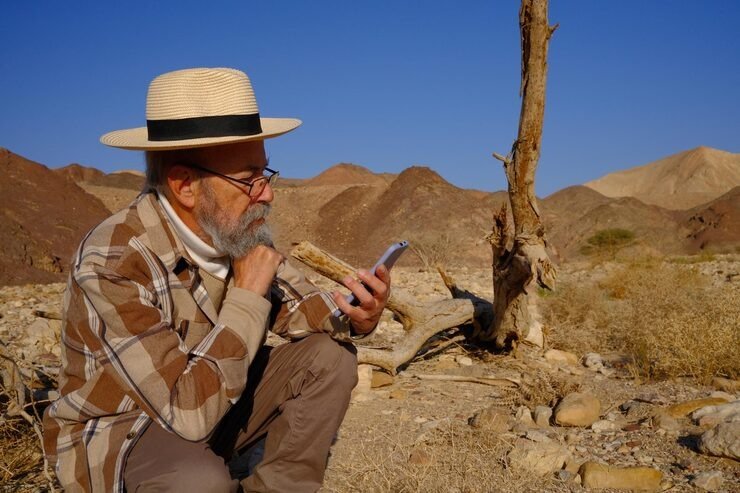
The Dubai Desert Conservation Reserve is proof that even Earth’s most punishing environments teem with life — if you know where to look and when to look. From the iconic Arabian oryx whose recovery represents one of conservation’s finest hours, to the microscopic engineering genius of the darkling beetle harvesting fog from desert air, every creature here tells a story of adaptation, resilience, and extraordinary Survival.
The desert animals in the UAE calling the DDCR home aren’t just wildlife — they’re living proof of what focused wildlife conservation programs, smart eco-tourism and desert conservation policies, and genuine passion can achieve together. The reserve stands as a globally significant model. Other desert nations study it. That should tell you something.
Don’t just read about it — experience it firsthand.
👉 Join Sunset Evening Safari for a guided Dubai desert safari wildlife experience that goes far beyond the dunes. Expert guides, authentic terrain, zero compromise on safety or experience. Your desert adventure starts here.